
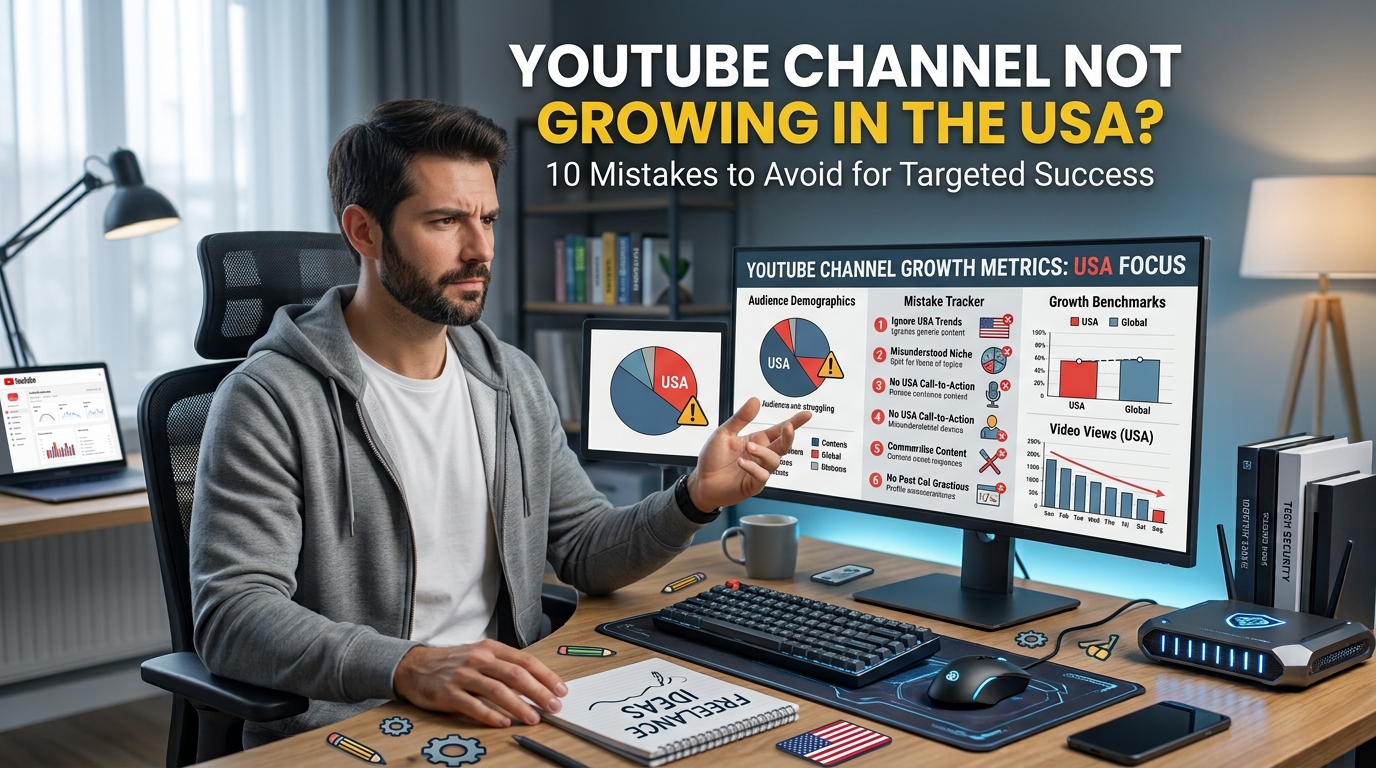
We’ve all been there: you spend hours scripting, filming, and editing a video that you know provides real value, only to hit “publish” and watch it flatline. If you are specifically targeting an audience in the USA but seeing stagnant view counts, it is easy to assume the algorithm is “broken” or biased against new creators. In my experience managing and auditing various channels, the issue is rarely the algorithm—it is almost always a misalignment between your content strategy and the high-intent expectations of the American viewer.
The U.S. market is arguably the most competitive space on YouTube. It is saturated with high-production value, rapid-fire editing, and creators who understand exactly how to hook a viewer within the first three seconds. If your YouTube channel is not growing in the USA, you aren’t necessarily doing something “wrong”—you are likely just missing the cultural and technical nuances that turn a casual browser into a loyal subscriber.
In this guide, I’ll break down the 10 most common mistakes that hinder U.S. channel growth. These are the same “course corrections” I use to help content creators pivot from low engagement to a consistent, growing American audience.
1. Ignoring Localized Trends and Cultural Context
The American internet moves fast. What is trending in Europe or Asia often doesn’t translate to U.S. audiences unless it is localized. If your content feels disconnected from current U.S. pop culture, holidays, or regional interests, viewers will click away to a creator who feels more “local.”
-
The Mistake: Using global trends that have already peaked or don’t apply to U.S. daily life.
-
The Fix: Use the “Explore” tab filtered by “United States.” Look at what the top creators in your niche are talking about this week and find a unique angle that fits your brand.
2. Weak Thumbnail-to-Title Synergy
In the U.S. market, your thumbnail is your advertisement. If your title promises one thing but your thumbnail shows another (or is cluttered and confusing), the Click-Through Rate (CTR) will plummet. YouTube’s algorithm prioritizes videos that keep people on the platform—which starts with a high-intent click.
-
The Fix: Your thumbnail should tell a story in under two seconds. Use high-contrast colors, minimal text (3-4 words max), and an expressive face if possible. The title should complement the thumbnail, not repeat it.
3. The “Slow Start” Problem
American audiences have a low tolerance for fluff. If your video starts with a 30-second animated logo, a long self-introduction, or “Hey guys, welcome back to the channel,” you are losing 40% of your potential viewers before the meat of the video even begins.
-
The Fix: Use the “Hook-Action-Context” framework. Start with the most exciting clip or the promise of the solution, deliver the value immediately, and then introduce yourself briefly. Get to the point in under 10 seconds.
4. Poor Audio Quality
Viewers will forgive average video quality, but they will never forgive bad audio. In the U.S., professional production standards are high. If your audio is echoey, tinny, or has loud background noise, viewers perceive your content as “low value” regardless of the topic.
-
The Fix: Invest in a basic shotgun or lavalier microphone. Even a $30 entry-level mic is infinitely better than your laptop’s built-in microphone. Record in a room with soft furniture to dampen echoes.
5. Inconsistent Upload Schedules
Growth requires trust. If you upload sporadically, your audience forgets you exist. When your YouTube channel is not growing in the USA, it is often because you haven’t given the algorithm enough data points to understand who your ideal viewer is and when they are likely to be watching.
-
The Fix: Start with one high-quality video per week at a consistent time. Treat it like a TV show—your audience should know exactly when to expect you.
6. Lack of Search Engine Optimization (SEO)
While “Browse” and “Suggested” traffic are great, “Search” traffic is the lifeblood of a new channel. If you aren’t ranking for keywords that Americans are typing into the search bar, you are invisible to new potential subscribers.
-
The Fix: Use tools like Google Trends or VidIQ to find long-tail keywords. Instead of a broad title like “Cooking Tips,” go for “Quick Weeknight Dinner Ideas for Busy Parents.”
7. Ignoring YouTube Shorts for Discovery
Shorts are the fastest way to get your face in front of a new U.S. audience. Many creators treat Shorts as an afterthought, but in 2026, they serve as a top-of-funnel discovery tool that can skyrocket your long-form video views.
-
The Fix: Create 30–60 second “teaser” clips from your longer videos. Direct viewers to the “Related Video” feature within the Shorts player to bridge the gap between quick entertainment and deep-dive education.
8. Not Engaging with Comments
YouTube is a social platform, not a broadcast network. If you ignore the comments section, you kill the community-building aspect that the algorithm loves. High engagement (likes, replies, shares) signals to YouTube that your video is worth promoting to more people.
-
The Fix: Spend 15 minutes after every upload replying to early comments. Ask a specific question in your video to prompt viewers to leave a response.
9. Failing to Target a Specific Niche
“Generalist” channels rarely grow in the U.S. market because the competition is too high. If you make videos about gaming on Monday, fitness on Wednesday, and finance on Friday, the algorithm doesn’t know who to show your videos to.
-
The Fix: Pick a “Hero” niche. Build authority there for at least 30–50 videos before expanding. When you solve one specific problem consistently, you become the “go-to” creator for that topic.
10. Focusing on Views Instead of Watch Time
Many creators obsess over “click count” but ignore “retention.” You could have 10,000 views from clickbait, but if those people leave after 10 seconds, your channel will tank. YouTube promotes videos that keep people on the site for as long as possible.
-
The Fix: Check your Audience Retention graph in YouTube Studio. Look for the “dip” points—where exactly are people leaving? Edit those sections out in your next video to keep the pacing tight.
Summary Checklist for Growth
If your numbers are stagnant, perform a “Channel Audit” this weekend using this checklist:
-
[ ] Review CTR: Is my thumbnail clear, or is it cluttered?
-
[ ] Check Retention: Are my intros too long? (Aim to get to the point in < 10 seconds).
-
[ ] SEO Check: Does my title include keywords people actually search for?
-
[ ] Audio Audit: Is my voice crisp and free of background noise?
-
[ ] Engagement: Did I ask a question to encourage comments?
Frequently Asked Questions (FAQs)
Does my location matter to the algorithm?
Not directly. You can be in Lahore and grow a U.S.-based channel. The algorithm follows the viewer, not the creator. If your content uses American English, addresses U.S.-centric problems, and references U.S. culture, the algorithm will naturally serve it to American audiences.
How long does it usually take to see growth?
Be realistic: it often takes 6 months of consistent, weekly uploads before you see a “compounding” effect. Do not judge your success by the first 10 videos. Think of this as a marathon, not a sprint.
Is buying subscribers a good way to “kickstart” the channel?
Never. Buying subscribers creates “dead weight” on your channel. These accounts won’t watch your videos, which tanks your engagement rate and tells the YouTube algorithm that your content is uninteresting, effectively killing your organic reach.
What is a “good” Click-Through Rate (CTR)?
For a newer channel, a CTR between 4% and 8% is healthy. If you are below 3%, your thumbnail or title is likely the problem. If you are above 10%, you are doing great—keep doubling down on that style!
Can I change my niche if I am already established?
Yes, but do it gradually. Use a “bridge” topic—something that connects your old niche to your new one—to bring your existing subscribers along for the journey rather than alienating them overnight.